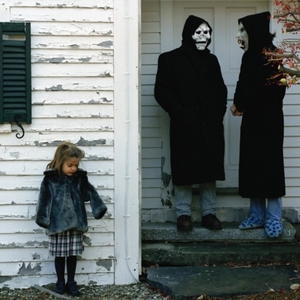
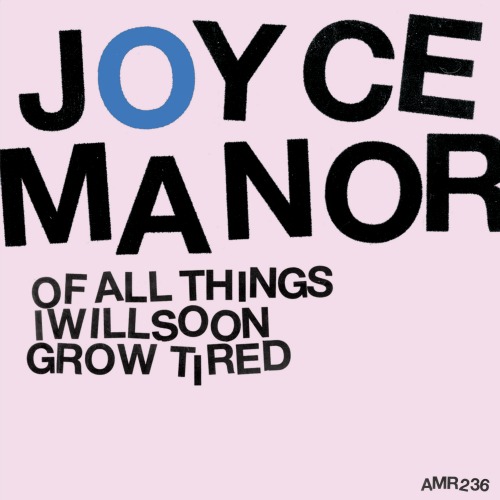
For Long Island, no music scene was more fruitful than that
which emerged in the late 90s and early 2000s. Bands like Bayside, Glassjaw and
Taking Back Sunday found much - if a little undeserved - success a realm that,
for whatever reason, reached past high school. Then there was the massive
success that was Brand New. Ask nearly anyone who was in high school between
2002 and 2009, and they can easily list off their favorite Brand New cuts.
Brand New’s success is no surprise. They started off with an above average
pop-punk album and continually challenged themselves with each release in an
effort to evolve. There was also the presence of Jesse Lacey, an oft
frustrating front man who had a very contentious relationship with his fans.
This relationship, I think, made the fans that much more rabid. While Lacey was
known to be unwilling to give them an inch, his fans would go exponential
lengths for him in an effort to gain attention. Mixed with the fertile soil
that was the Long Island scene, it would have been more surprising if Brand New
wasn’t a smash hit.
Residing in a hardcore corner unbeknownst to most whose
introduction to Long Island was Your
Favorite Weapon was melodic-hardcore band Crime In Stereo. Crime In Stereo
was started by Alex Dunne; he was a member of post-hardcore band The Rookie
Lot, in which Jesse Lacey played as well. Dunne chose to go the more aggressive
route and Crime In Stereo quickly became a much adored Long Island Hardcore
band. Brand New and Crime In Stereo’s career trajectory have many similarities.
They both released four albums, one of each were genre-defying. They both
challenged themselves continuously throughout their careers. They were both
stalwarts of the mid 2000s punk scenes, in their respective scenes of course.
So, two years after Crime In Stereo’s break-up and three years after Brand
New’s final full-length release (by their own accord) which career holds up better to
scrutiny? Let’s compare.
Freshman Album: Finding Sturdy Ground
Your Favorite Weapon:
Released in October, 2001 this album is often cited as a crucial release,
although upon relistening to it, I’m unsure why. The album starts off strong
enough with “The Shower Scene,” a by the numbers angsty pop-punk song that, at
least, is not embarrassing to listen to. From there, though…things get dicey.
We have “Jude Law and A Semester Abroad,” a song that’s lyrically mysoginistic
where victim blaming and violent images of women dying in plane crashes abound.
“Mixtape” name drops the Smiths like (500) Days of Summer, but it’s somehow
more annoying. “Last Chance to Lose Your Keys” is about masturbating but isn’t
tongue in cheek? Curious. The only song I can really give kudos to is “70x7,”
but even that is only because of the anecdotal evidence that Jesse Lacey
absolutely hates that song. And if anyone ever says “Soco Amaretto Lime” is a
good song but doesn’t mention the shit production, I’ll punch them in the
dick.
So, generously, I’ll say
“this album has not aged well at all.”
Explosives and The Will To Use Them:
Similarly, Crime In Stereo’s first album is also their weakest, but not nearly
as strikingly as Brand New.
Explosives lives
up to its name as
the album
immediately kicks into gear with a gang shout “We’re all going to hell!” and
then barrels through the next 12 songs in a blistering 28 minutes.
This album, while it slows down
occasionally, never has an acoustic break (thank Christ) and packs a punch
right up until “Arson At 563,” which demonstrates CIS’s knack for knowing
exactly how to close an album. Here, you can even notice the staggering
difference in lyrical content. Brand New obviously is hungup on ex-girlfriends
and very contentious towards everything. Even though I’d assume that Crime In
Stereo is the angrier of the two, Crime In Stereo’s lyrics exude a kind of
waywardness towards their “trainwreck of a life.” They comment on more societal
issues (“No Gold Stars for Nationalism”) where Brand New resigns to bitching
about high school. This is a good album, but our own Kyle Murphy put it best
when he called
Explosives a “very
good b-sides” record in the kitchen of the party that time we became friends.
Sophomore Record: Defining Genres
The Troubled
Stateside: Like Brand New, Crime In Stereo’s sophomore release is easily
their most revered amongst fans old and new. This defines Long Island melodic
hardcore. Easily accessible yet unstoppably aggressive
The Troubled Stateside takes stabs at everything from center to
far-right republicans, lazy kids living off their parents money, and most
importantly, the state of their own lives as a post-grad. The shotgun blast
that is “Everything Changes Nothing Is Truly Lost” calls out faux-art students
hiding from loan collectors. “Sudan” comments on the mundanity of suburban
life, but somehow manages to remain captivating and relevant. That’s a lot
harder to do that it sounds; there are few things more banal than the
frustration of suburbia. Then, there’s the closing trifecta. “Dark Island
City,” the pseudo instrumental into “For Exes,” arguably the best song they
ever wrote, and then the grand finale “I, Stateside.” This album kills it, and
many would argue that this album was when Crime In Stereo peaked. I wouldn’t
disagree.
Deja Entendu: Let’s
just get this out of the way:
Deja
Entendu is light-years better than
Your
Favorite Weapon in every way, shape, and form. It’s structured better,
paced better, and sounds better. Similarly to
The Troubled Stateside, it starts off with a short introduction
track that sets the tone for the rest of the album. The tone is wholly
different from that of
Your Favorite
Weapon; instead of angsty, the band comes off as resentful. But of whom? No
longer of the girls that left Lacey masturbating on a Saturday night, but Brand
New’s own fanbase. A friend of mine posited recently that Lacey has always been
equally resentful of his fanbase and resentful of himself. By and large,
Lacey’s music taste has always seemed more aimed towards indie rock, but here
he is stuck making music for kids who listen to New Found Glory. His love of
the Smiths, Modest Mouse, and Built to Spill is well known and you can spot the
influence. However, his lyrics always seemed more directed than Morrisey’s
devil-may-care English self-commiserating. Where Issac Brock’s song writing
style is defined by his interpolation of American colloqiualisms, Lacey’s
attempt at playing with idioms seems clumsy and he lacks the metrical
sensibility (and guitar chops) of Doug Marsch. So, it’s no wonder that Lacey
comes off as resentful in songs like “I Believe You, But My Tommy Gun Don’t.”
But, where the previous angst stunted the song writing, it only helps the
effort here. I also have to applaud Lacey’s use of challenging images
here. Perhaps one of the most
complex allegories, the band constructs an uncomfortable five minutes
describing a date rape from the point of view of the rapist: the events
parallel a band being preyed on by a label. We’re also treated to the violent
images of soldiers getting their throats slit in “Good To Know If I Ever Need
Attention All I Have to Do Is Die.” Awful song title but great song.
Unfortunately, once again Brand New falls short of Crime In Stereo in closing
the album. Acoustic closers may do it for every one else, but I am partial to
the idea of putting “Play Crack the Sky” before “Good To Know…” Like
The Troubled Stateside, many people
decree this as Brand New’s strongest effort. This time though, I think
nostalgia is crippling people’s judgement.
Junior Record: Long Island Burns
The Devil And God Are
Raging Inside of Me: Ah, the third record: always apt for a comeback from
the sophomore slump, yes, but what happens when you’re second album didn’t
flop? You experiment. Following a three-year break and nine leaked songs, Brand
new finally released
The Devil and God
are Raging Inside of Me in November 2006. The album was decidedly a
departure from previous material. It was louder. More abrasive. More sinister.
Often uncomfortable. Lacey and co. had moved into a time when their friends
began to die and they began to grow even more resentful of their fanbase; evidenced
as their playing of “Degausser” twice in a row at Bamboozle 2007. However,
The Devil and God channeled all of that
unrest into Brand New’s strongest record of their career.
First and foremost, this record is LOUD.
Howling shrieks cascade into explosive wall of sounds. They continue to
challenege themselves, taking chances with their songwriting structure and
futher obfuscating their lyrical content. Some similar themes are still there
(lost love in “Not The Sun”) but overall, everything about this album is
stronger. My main complaint, once again, is the closing track. Do we really
need an acoustic closer every album? Regardless, I do genuinely enjoy
“Handcuffs,” but again, it would have fared better in the middle of the album.
That decision notwithstanding, I feel
The
Devil and God is Brand New’s defining album of their career.
…Is Dead:
Following in Brand New’s developmental footsteps, Crime In Stereo decided to
attempt a departure from the melodic hardcore mold they had conquered
previously. The roots of hardcore are still there, but overall the band’s scope
is much larger. Do I dare refer to this album as “cerebral?” “XXXX” (For Exes,
four x’s. Get it?) answers that rhetorical question right off the bat: pounding
drums open the track and soon we’re hearing lead singer Kristian Hallbert
pleading for a challenge. “Say I won’t” as if an entire mission statement for
the album emerges in those three words. No sooner this soaks in are we thrust
into the weird, decidedly druggy jam “…But You Are Vast,” and then as we blink
and we’re smoking cigarettes for our first time to “Small Skeletal.” Like Brand
New, this is an album that has burned an image into my mind permantely in
“Unfortunate Tourists.” Post-coital sitting on the edge of a bed. An unfortunate
tourist in an unforgiving foreign land. Personal thoughts aside, you have the
faux-nostalgic “Nixon” (Brand New are you writing this down?) and then the
creepy and quiet “Vicious Teeth.” The album does not end as powerfully as
The Troubled Stateside did, but the
“Orbiter”/ “Choker” combo is a strong one regardless. Now, can I definiteively
say
The Troubled Stateside is better
than
…Is Dead? Not at all.
The Troubled Stateside is endlessly more
accessible, true, but
…Is Dead is
challenging in all the right ways. Both are phenomenal albums.
Senior Record: Life's a Train Then You Die
I was trying to
describe you to someone: I know the title was named after a poem, but it is
a truly beautiful name for a record. My friend, however, likes to refer this
album as “Live In Tokyo” because of the somewhat bizarre cover art.
I was… is a very bizarre album. The
sound is cohesive, no doubt, but there are some puzzling moments that still
somehow work. “Queue modernes” kicks off the record, takes a cue (eh? See what
I did there?) from Brand New with an ethereal ambiance that blows into a jam.
There’s the closest thing to an acoustic to electric song Crime In Stereo ever
released in “Young;” a song that’s brutal none the less. They don’t relent on
political commentary (“Republica”), it’s just a bit more subtle than before.
Perhaps a bit too much. The most confusing moment in the entire record is a
cover of
their own “Dark Island
City” that actually builds on the original and fits within the context of the
album. Then Crime In Stereo puts forth the best closer they ever wrote; a
perfect end to their career with “I Cannot Answer You Tonight.” It’s the only
song on the record that harkens to their early days without compromising their
sound. No other song even attempts it. Is this album a dissapointment? I loved
it when it was released, but three years later I rarely spin it. I’d rather
just listen to their earlier work. Sometimes when I’m sad I’ll throw on
“Young,” or attempt to cheer myself up with “I cannot answer you tonight,” but
when Crime In Stereo announced they were breaking up, there was a sense of calm
about the announcement. They didn’t end on a high note, per se, but you could
track their sound and their trajectory and
Live
In Tokyo had a sense of finality about.
Crime In Stereo Is Dead. Long Live Crime In Stereo.
Daisy: Another
final (?) album that was the source of great controversy,
Daisy actually packs one hell of a punch. The record is as loud as
The Devil and God but way dirtier. If
you had told me that the band that wrote “Sudden Death In Carolina” would open
their fourth record with a sample from a 1920’s opera singer, I would have
punched you right in the mouth. But then again, here we are. Like Crime In
Stereo, Brand New was not content to stagnate. This record is often overlooked
because it pretty much completely eschews everything that made Brand New
likable. There are no catchy sing-alongs here. You can check your angst at the
door; this is unadulterated anger and frustration now. What’s that? You’re too
soft for a forty-five minute blitzkrieg of sound? Well…I guess they put Noro at
the end of the record for you. If Brand New had released this under a different
name, I’m sure the praise would have been unanimous. Alas, precedent cripples
judgment once again and a solid album is overshadowed by its overzealous older
brother.
Post Script: Conclusions Upon Graduating
Brand New and Crime In Stereo are seminal early 2000s bands.
Without Brand New, we actually may have been spared a bunch godawful pop-punk
bands. The reach of Crime In Stereo has yet to be determined. I have no doubt
both will be cited as heavily influential in the coming years, but to what
extent? When melodic hardcore inevitably comes back into the forefront, will
people be name dropping Crime In Stereo offhand as much as they do Cap’n Jazz
for Emo? Will Daisy be the impetus
for a noisey, and hopefully listenable, pop-punk music?
In terms of preferences, I think my allegiance is clear. I
will always live and die by Crime In Stereo whereas Brand New remains a band I
love, but love to be critical about even more. What are your thoughts?